
High-Net-Worth Advisor Lab
Meetings & Events
Why Most Advisors Never Escape Main Street
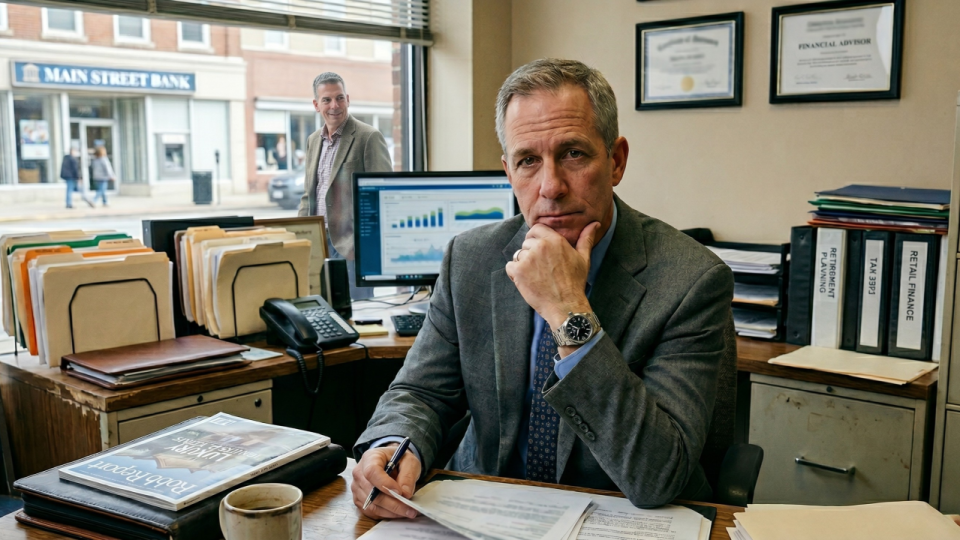
Michael is a financial advisor in Bloomington, Minnesota. He drives a 2024 Mercedes C-300 and has two kids at Ramalynn Academy. He can pay his bills each month and put money into his 401(k). But he cannot attract high-net-worth clients.
From the outside, Michael looks successful.
He has the office. The income. The wardrobe. The life most people would call comfortable.
That is exactly why this problem is so dangerous.
He is doing too well to feel desperate.
But not well enough to make the leap.
Michael is not broke. He is not failing. He is not incompetent. In fact, he is exactly where thousands of advisors get stuck. He has built a respectable Main Street practice and convinced himself that one more referral source, one more seminar, one more LinkedIn post, or one more polished presentation will finally open the door to affluent clients.
It will not.
Because Michael does not have a marketing problem.
He has a market problem.
His entire business has been built to serve Main Street clients. His referrals come from Main Street relationships. His conversations are shaped by Main Street concerns. His examples, his stories, his confidence, and his service model all come from years of serving people with ordinary financial complexity.
There is nothing wrong with that.
It is just not the same as being built for high-net-worth clients.
That distinction matters more than most advisors want to admit.
High-net-worth clients are not simply richer versions of middle-market clients. They do not buy advice the same way. They do not measure trust the same way. They do not ask the same questions. They are not looking for a generalist who seems sharp. They are looking for someone who can operate in a more complex environment with calm, precision, and judgment.
They want discretion.
They want coordination.
They want someone who understands how wealth affects family dynamics, tax exposure, estate structure, business risk, real estate decisions, and legacy planning.
They want someone who sounds like they belong in the room with their CPA, their estate planning attorney, their business lawyer, and their insurance specialists.
They want someone who reduces risk.
That is where Michael loses ground.
Not because he lacks technical knowledge.
Because the signal he sends does not match the world he wants to enter.
His current clients shape his mindset. His referral sources shape his opportunities. His daily conversations shape what feels normal. Over time, all of that becomes visible. It shows up in the questions he asks. It shows up in the issues he emphasizes. It shows up in the way he frames value.
And affluent clients notice.
They notice when your examples sound too small.
They notice when your network does not include serious centers of influence who serve people like them.
They notice when you talk about products before strategy.
They notice when you sound like a competent advisor who wants bigger clients, instead of an advisor whose entire practice was designed for bigger clients.
This is the uncomfortable truth most people in the industry avoid.
The move from Main Street to high-net-worth is not a prospecting shift.
It is a practice transformation.
You do not cross that line by adding better tactics to the same business.
You cross it by becoming different.
Your client base must change.
Your network must change.
Your language must change.
Your positioning must change.
Your standards must change.
If the people you spend time with do not regularly work with affluent families, they cannot pull you into that market. If your value proposition sounds like it could apply to anyone with a retirement account, it will not attract people with meaningful complexity. If your client experience does not communicate discretion, strategic depth, and confidence under pressure, affluent clients will keep looking.
This is why so many advisors remain trapped in a cycle of false progress.
They keep improving the packaging while avoiding the deeper issue.
They buy better tools.
They sharpen their branding.
They become more active online.
They get better at asking for introductions.
And none of it solves the real problem because the underlying business still says Main Street.
That is what makes this such a brutal trap. The advisor is active. Disciplined. Productive. Busy.
But busy inside the wrong model.
A Main Street practice trains you to think in terms of volume, accessibility, and broad appeal. A high-net-worth practice requires something else. It requires selectivity. It requires depth. It requires a different type of relationship capital. It requires a professional ecosystem that can reinforce your credibility. It requires the confidence to speak to consequences, not just solutions.
In other words, it requires a different identity.
That is the part almost nobody wants to hear.
Because identity work is harder than marketing work.
It is easier to post content than it is to admit your current business was not built to serve the clients you say you want. It is easier to tweak a website than it is to rebuild a referral network. It is easier to blame the market than it is to face the possibility that affluent prospects are accurately reading the signals your practice is sending.
Michael is not an outlier.
He is the pattern.
He represents the advisor who has enough success to feel validated, enough frustration to feel restless, and enough blind spots to stay stuck for years.
If that description makes you uncomfortable, good.
It should.
Because the first step in moving from Main Street to high-net-worth is telling the truth about where you are.
Not where you want to be.
Not what you post about.
Not the image you project.
The truth.
Does your practice actually look, sound, and feel like the kind of place a high-net-worth client would trust?
If the answer is no, the solution is not another tactic.
The solution is transformation.
If you are ready to trade the Main Street client practice for a high-net-worth client practice, DM me to see if you qualify for a spot in my High-Net-Worth Advisor Lab.